Montessori at Home: Fostering Independence in Early Childhood
August 30, 2026
By Anjali Nair (Principal)
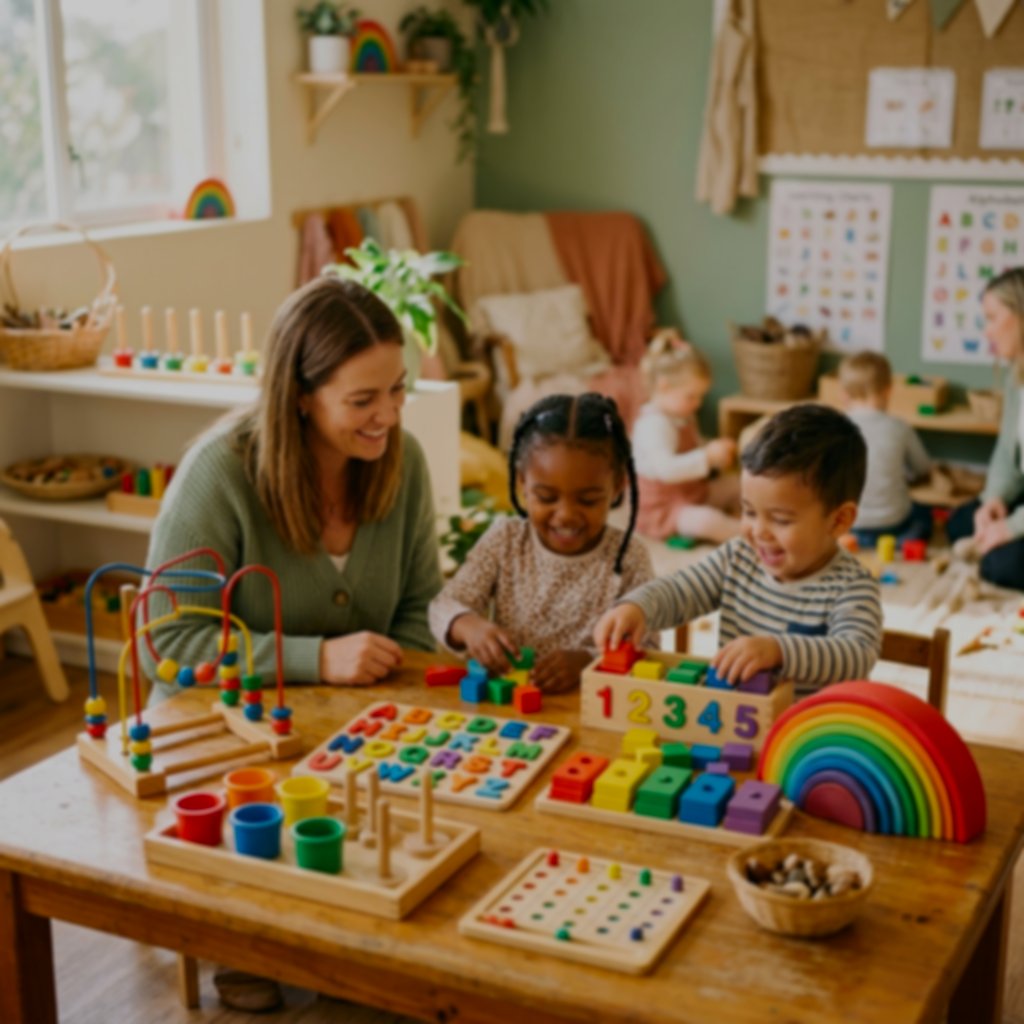
### Fostering Independence through Prepared Environments
When parents hear the term "Montessori," they often think of specialized wooden toys or expensive preschool classrooms. However, the core philosophy of Dr. Maria Montessori is actually a way of looking at and respecting the child—and it can be easily integrated into your home.
The key to Montessori at home is the **Prepared Environment**. A prepared environment is safe, ordered, and accessible, designed to encourage children to do things for themselves. When we set up our homes to support child-led discovery, we build our child's self-reliance, coordination, and confidence.
#### 1. Focus on Accessibility
Take a walk through your home at your child’s eye level. Can they reach their own toys? Can they wash their hands without help? Simple additions can make a huge difference:
* **Low Shelves**: Store toys on low, open shelves instead of deep toy chests. This makes it easy for them to choose an activity and return it when finished.
* **Step Stools**: Place sturdy wooden stools in the bathroom and kitchen so they can reach the sink to wash hands or help rinse vegetables.
* **Self-Serve Water**: Set up a small water dispenser and child-sized cups on a low table so they can get a drink when thirsty.
#### 2. Introduce Practical Life Activities
Children love to contribute to the family dynamic. In Montessori, we call these chores **Practical Life activities**. Toddlers can help with:
* Watering household plants using a small watering can.
* Sweeping crumbs using a small child-sized dustpan and broom.
* Peeling bananas or spreading butter on toast with child-safe knives.
By stepping back and allowing your child to complete these tasks (even if they make a small mess!), you send a powerful message: *"I trust you, and you are capable."*